
It’s not only the flames posing danger
By Dave Mason
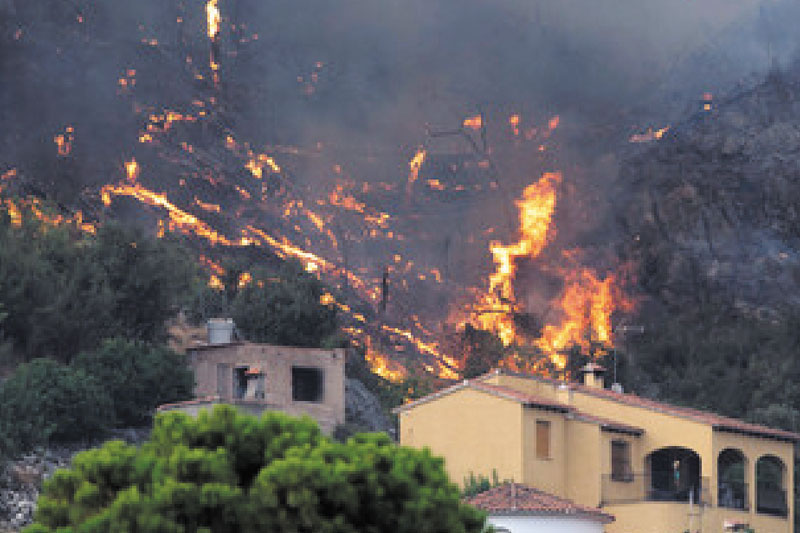
When most people picture wildfire, they imagine a wall of flames racing toward homes. But often, that’s not what causes the greatest danger.
It’s the embers: burning pieces of wood, vegetation and debris that break away from a wildfire and continue to glow long after the flames have passed. Carried by wind, they can drift far ahead of the main fire, landing on rooftops, collecting in gutters, slipping into vents and igniting dry materials around a home before the fire itself ever arrives.
In fact, embers are one of the most common reasons homes are lost in wildfires. A house may survive the direct path of flames, only to catch fire from embers that settle quietly in vulnerable places. That’s why understanding ember danger – and knowing how to reduce the risk – is such an important part of wildfire safety.
Embers often collect in gutters, vents and eaves, where they can build up enough heat to ignite nearby materials. Decks, patio furniture and dry leaves or mulch close to the house are also common places where ember-caused fires begin.
They can travel up to five miles ahead of a wildfire, depending on wind speed, terrain and ember size. Strong winds can keep embers airborne longer and push them farther from the main fire. Hills and canyons can create updrafts that lift embers higher and carry them even farther.
There is no fixed burn time for an ember. How long it stays hot enough to start a fire depends on its size, what it is made of and surrounding conditions. Dense materials can hold heat longer, while hot, dry weather can help embers stay dangerous even longer.
The good news is that there are practical steps you can take to reduce the risk. No home is completely fireproof, but small changes can make a meaningful difference.
Keep gutters and roofs clear of dry leaves, pine needles and other debris. Pay close attention to the area nearest your home, where mulch, dead plants, leaves and other combustible materials can give embers a place to start a fire.
Protect vents and openings. Embers can blow into attic and crawl-space vents, so screening or ember-resistant venting can help reduce that risk.
Be careful with decks and patios. Keep the area under and around them clear of dry vegetation and flammable storage. Patio cushions, doormats and similar items can also catch fire easily if embers land on them.
Move firewood, storage boxes and other combustible materials away from exterior walls. Maintain your yard by trimming dead vegetation, clearing fallen leaves and keeping landscaping in good condition, especially during hot, dry, windy weather.
Have a plan. Know your evacuation routes, keep important items ready to go and stay alert to local warnings during fire season.
Wildfires are dangerous enough when flames are visible. But the real threat often arrives sooner, quieter and from farther away than many people realize.
When it comes to wildfire danger, it’s more than flames. It’s the embers.
The Scripps Ranch Fire Safe Council offers free evacuation plans. Learn more at srfiresafe.org or call (858) 201-3711.